Complete Usage Guide for Concrete Pipe Mold
Concrete pipe molds are core industrial forming tools specially designed for manufacturing precast concrete drainage pipes, sewage pipes, culvert pipes and hydraulic pipeline products. Mostly made of high-strength steel plates and reinforced with rib plates, these molds feature high rigidity, pressure resistance, deformation resistance and repeated usability. Standard concrete pipe molds consist of outer molds, inner molds, end molds, fastening bolts, positioning fixtures and lifting accessories. With standardized operation and proper maintenance, the molds can produce concrete pipes with smooth surface, uniform size and stable structural performance, widely applied in municipal engineering, road construction, water conservancy projects and residential infrastructure. This article provides a systematic and standardized operation guide for concrete pipe mold use.
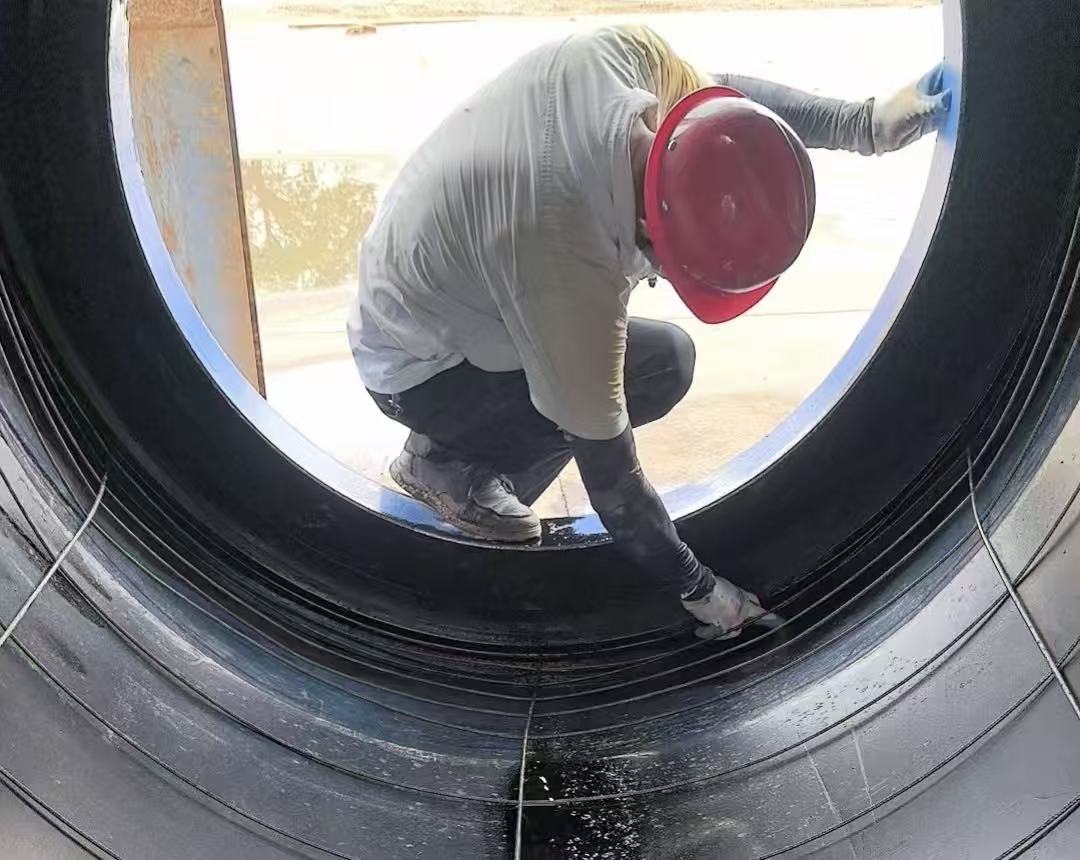
1. Pre-Use Preparation & Inspection
Qualified pre-operation preparation is the premise of ensuring pipe forming quality and extending mold service life. All inspection and preparation work must be completed before concrete pouring.
1.1 Mold Appearance & Structural Inspection
First, conduct a comprehensive visual and structural inspection of the disassembled or assembled mold. Check the inner and outer mold surfaces for concrete residue, rust, cracks, dents or deformation. Verify that all reinforcing rib plates are firmly welded without desoldering or fracture. Inspect the end molds for flatness to avoid uneven pipe end faces. Check all fastening bolts, pin shafts and positioning fixtures for integrity, ensuring no missing, sliding wire or severe wear. For molds used repeatedly, focus on detecting local deformation of the mold mouth and sealing gaps to prevent concrete slurry leakage during pouring.
1.2 Cleaning & Polishing
Thoroughly clean the mold inner wall before assembly. Remove residual concrete blocks, cement slurry and dirt with a high-pressure water gun, wire brush or scraper. For stubborn hardened mortar, polish the mold surface gently to ensure a smooth and flat forming surface. Completely dry the mold after cleaning; residual water stains will affect the bonding effect of the release agent and cause pockmarks on the concrete pipe surface.
1.3 Release Agent Coating
Evenly apply a thin, uniform layer of professional mold release agent on the entire inner surface of the cleaned and dried concrete pipe mold. Do not apply excessive release agent to avoid flowing marks, oil bubbles or uneven color on the concrete surface. Meanwhile, avoid missing coating at mold corners, joints and end mold positions. The release agent effectively isolates the concrete from the steel mold, prevents adhesion, ensures smooth demolding, and protects the mold surface from corrosion and abrasion.
1.4 Concrete Mix Preparation
Adopt high-quality concrete mix proportion according to pipe design requirements. Match the ratio of cement, fine aggregate, coarse aggregate and water reasonably, and conduct a slump test to ensure the concrete has stable fluidity and compactness. For reinforced concrete pipes, prepare steel reinforcement cages in advance and place them in the middle of the mold accurately to meet the structural strength standards of finished pipes.
2. Standard Mold Assembly Process
Scientific assembly directly determines the dimensional accuracy and anti-leakage performance of concrete pipes. Follow the standardized assembly sequence strictly.
First, place the cleaned and release agent-coated outer mold on a flat, horizontal operating platform or production base, and adjust the level to ensure no tilt. Install the prefabricated steel reinforcement cage in the center of the outer mold, fix the positioning brackets to ensure the steel cage is evenly spaced without offset. Then assemble the inner mold slowly, adjust the gap between the inner and outer molds to be consistent with the pipe wall thickness standard, and fix the positioning pins. Finally, install the end molds at both ends, align the mold interfaces accurately, and fasten the symmetrically distributed bolts in a diagonal order.
After assembly, repeatedly check the mold tightness and dimensional accuracy. Ensure all joints are closely fitted without gaps to prevent slurry leakage during vibration and pouring. Confirm that the overall size, roundness and straightness of the mold meet the production specifications of target concrete pipes.
3. Concrete Pouring & Compacting Operation
Standard pouring and compacting are key to eliminating internal voids and improving the compactness and surface quality of concrete pipes.
Pour the prepared qualified concrete into the assembled mold slowly and evenly in layers. Avoid one-time rapid pouring to prevent material accumulation and uneven distribution. During pouring, cooperate with professional vibrating equipment for continuous compacting. Use high-frequency vibration to discharge air bubbles inside the concrete, eliminate voids and honeycomb pockmarks, and make the concrete closely combined with the steel mold to form a dense and smooth pipe body.
Control the vibration time reasonably: excessive vibration will cause aggregate segregation and mortar floating, while insufficient vibration will lead to incomplete air discharge and uncompact pipe body. After the mold is fully filled with concrete, level the top surface, trim the pipe end shape, and clean up the residual concrete on the mold joints to avoid affecting demolding and subsequent reuse.
4. Curing & Demolding Specifications
4.1 Concrete Curing
After pouring and compacting are completed, place the integral mold with concrete pipe in a flat and ventilated curing area for static curing. Avoid extrusion, vibration and tilt during the curing period to prevent pipe deformation. According to the ambient temperature, control the curing time strictly: under normal temperature (20-25℃), the static curing time is not less than 12-24 hours. In low-temperature environments, appropriately extend the curing time to ensure the concrete reaches the initial setting strength required for demolding. Regularly moisturize and maintain the concrete surface during curing to ensure the strength growth of the pipe body.
4.2 Standard Demolding Process
Demolding can be carried out only when the concrete pipe reaches the specified initial strength. Follow the fixed demolding sequence strictly: remove end molds first, then loosen inner molds, and finally disassemble outer molds. When loosening bolts, operate symmetrically and step by step to avoid unilateral force causing mold deformation or pipe surface damage.
During demolding, use a rubber hammer to gently tap the outer wall and edge of the mold to separate the mold from the concrete pipe naturally. Do not use sharp tools or heavy machinery to pry hard, so as to prevent scratching, chipping or cracking the finished pipe. After the mold is completely separated, lift the mold stably with professional lifting equipment and place it flat for subsequent cleaning and maintenance.
5. Daily Maintenance & Storage Management
Scientific maintenance can effectively extend the service life of concrete pipe molds and ensure stable production accuracy for a long time.
Clean the mold thoroughly immediately after each demolding. Flush away residual concrete and mortar with a high-pressure water gun, and polish the local residual mortar points clean. After the mold is completely dried, coat the inner forming surface with a thin layer of release agent and spray anti-rust oil on the outer steel surface and welding parts to prevent oxidation and rust.
Carry out regular inspection and maintenance every month: check the mold for deformation, weld cracking, bolt wear and seal aging, and repair or replace damaged parts in time. For long-term unused molds, store them in a dry, ventilated and flat warehouse, avoid outdoor stacking and rain soaking, and place spacers between stacked molds to prevent extrusion deformation. Keep the mold surface dry and clean during storage, and conduct regular anti-rust treatment.
6. Safety Operation Precautions
All operators must receive professional training, master mold assembly, pouring, demolding and lifting operation specifications, and wear protective gloves, safety helmets and other protective equipment during operation.
Lifting and handling molds must use matched professional equipment, strictly prohibit overload lifting and irregular hoisting, to prevent mold falling and deformation accidents.
During concrete vibration and pouring, avoid collision between vibrating equipment and the mold to prevent mold displacement and deformation.
It is forbidden to operate with faulty molds. Stop production immediately once deformation, cracking or severe slurry leakage is found, and continue production only after maintenance and calibration.
Standardize the electrical operation of vibrating and mixing equipment to avoid electric leakage and mechanical injury accidents.
7. Conclusion
Concrete pipe molds are essential precision tools for precast pipe production. Standardized operation in pre-use inspection, assembly, pouring, curing, demolding and daily maintenance is not only the key to ensuring the dimensional accuracy and surface quality of concrete pipes, but also the core measure to extend mold service life, reduce production costs and improve production efficiency. Following this usage guide for standardized construction and maintenance can effectively avoid common problems such as pipe deformation, surface defects and mold damage, ensuring stable and high-quality output of concrete pipe products for engineering construct

 English